
Posts by isculpt
Capturing Dick From Video
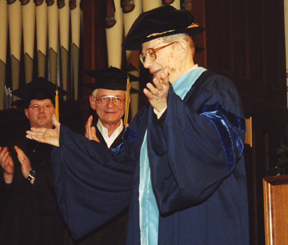
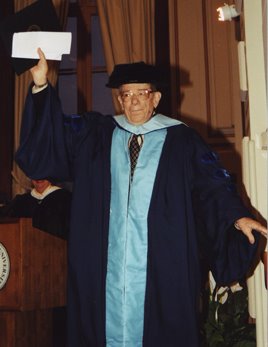
I am trying to capture images of Dick’s face and hands from a wonderful video that has been provided by Vermont College. This resource will be very valuable for the production of the sculpture of Dick Hathaway. But how do you capture stills from a CD? I am working with a company that provides software that does just that. It is calls Snapz Pro X. I’ll let you know how that goes.
I hope it can be done. The resource of capturing stills will not only help me on Dick Hathaway but I can see how using this type of software can be helpful to many future sculptures. I just need to be sure I can get photographs that I can work from.
They Are Here!
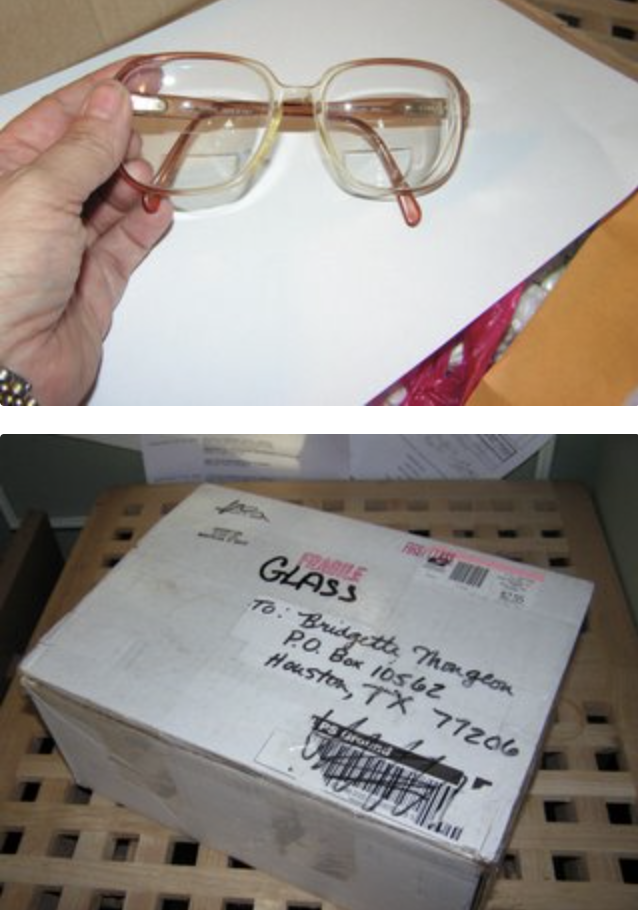
Dick’s glasses came today, my only personal affects that have come of Dick’s. Whenever sculpting posthumous sculpture I cherish the time with personal affects. This is all I have but it is so great. I will make a mold of these glasses and cast them in wax so that they will then be made in bronze. I will need to have these wax glasses for me to be able to work on the bust or head of Dick. So I’ll get on that right away. This is so great!

Is This Dick On The Bench?
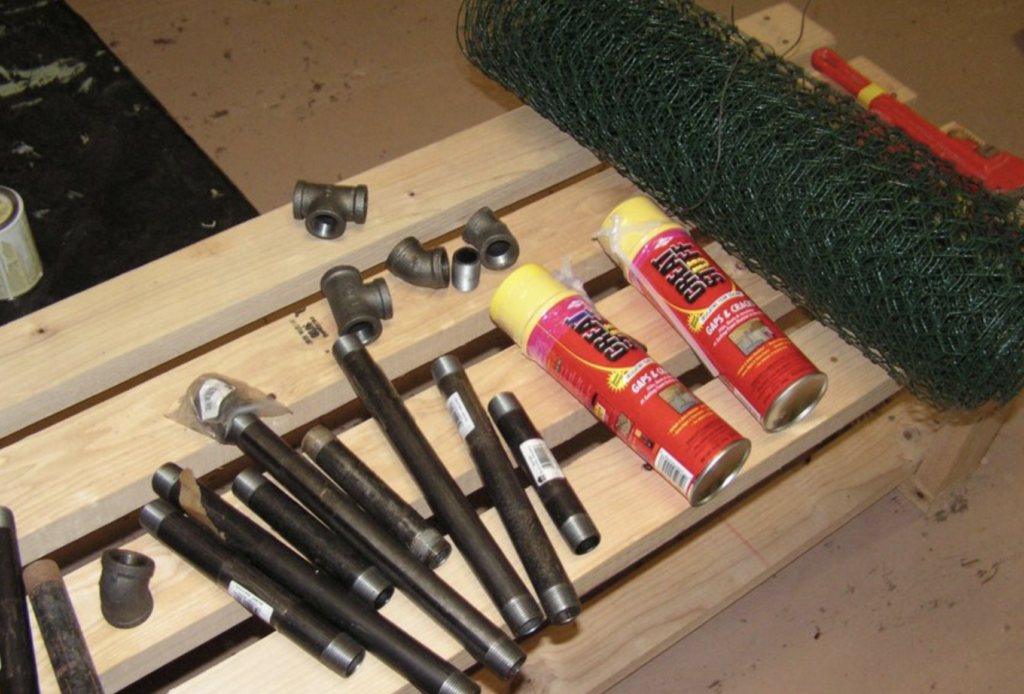
Believe it or not this is how the sculpture starts. A bunch of pipe, wire, and spray foam. This is the beginning of the armature. The armature is what the clay is put on. An armature is very important. It needs to be stable but light. A good armature makes an artist’s job easy, a bad armature can become nightmare later through the sculpting process. If I can lighten my armature with foam then it makes for a lighter sculpture and much easier to work with. So yes, for right now this is Dick on the bench
I Am So Excited!
A few days ago I received this e-mail from Nancy, Dick’s daughter.
Hi Bridgette,
I did find glasses and they are on their way to you.
Take care,Nancy
I was thrilled! It is a huge thing, not many people would realize, but it is really important for me and for the sculpture. As you watch the process you will see. Can’t wait!
The Creative Process
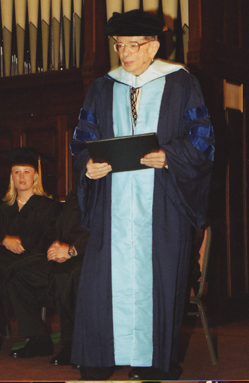
In my first semester at Vermont College as I studied the process of posthumous sculpture for my book “Bringing to Life the Spirit of the Deceased – A Sculptor’s Journey.” I noted there are documented stages of the creative process.
“In the late nineteenth century and early twentieth century, German, physiologist Herman Helmholtz and mathematician Henri Poincaré defined four steps in the creative process: saturation, incubation, illumination and verification. American Psychologist George Kneller later added first insight to the list of stages of the creative process. Artists, scientists, mathematicians, and musicians journey through all these stages as they are creating a piece of artwork, seeking new ideas and solutions or creating music. Each phase of the creative process is a little different.”
In the case of the Dick Hathaway sculpture, first insight might be the idea of creating this work of art. Then I enter the stage of saturation, which that I am in now. I am saturating myself with everything that is Dick Hathaway. I feel that I am quickly entering incubation. Everything that I am finding out about Dick will incubate within me and will continue as I begin sculpting. Illumination comes when I have captured Dick, his likeness and his spirit. Verification is checking everything to make sure it works.
Saturation and verification are something that I can do physically. I can manipulate that part of the creative process. The other three are more mystical in nature. I have spoken with my husband often about this subject. He, too, is an artist. I believe you can welcome and entice the creative process, but you cannot harness it—creativity kind of floats out there. You just try to make all things ready and hope you will “catch the wave and ride it in.”
… In my inner journey and research of this idea of creating posthumous portraiture I wonder, does something or someone meet me in this mystical place of the creative process?”
Waiting Is Honoring
I also want to wait from one commission to the next as it feels more honoring to my subject. Sometimes one commission will overlap the other in some aspects of the sculpting. For example Patsy and Lucas.
Most of that “Peter Pan” stage comes within the face of the individual, though there is a great deal of knowing in the pose and posture of my subject as well.
You will see as I work on the sculpture of Dick that I will create the head separate from the body. When I feel I have reached the “Peter Pan” stage with the head I may proceed to work with another commission. As of this date both Lucas’ and Jeanine’s face have been approved. Lucas’ body should be approved soon and then both commissions will go to the next stage of the bronze process-the mold making. That is a mechanical process and requires no feeling or emotion from the artist. All of this means that it is a perfect time for me to begin Dick.
Never Two At Once?
When working on commissions of individuals I try never to work on more than one at a time. The reason for this is that I have a difficult time separating each. Somehow I feel that the personalities get mixed up within the clay. I don’t know if anyone else can feel it, but I do. I have to wait for what I call my “Peter Pan” stage.
This is how I explain it in the book
“There is a scene in the movie “Hook” where a little boy comes up to the grown-up Peter Pan, played by Robin Williams. He mushes his face around pushing gently here and pulling there. The contours of Robin Williams’ face change like a piece of silly puddy, and then at one point the little boy holds the face, mushed in his hands, smiles as if some great revelation has just taken place and says, “There you are Peter Pan.” It is that same illumination that I feel when I approach this point in the sculpture. Often, in jest with the clay and myself I will push past that point of frustration, and when I capture the essence of the subject it is such an “Ahha” moment, that I will mutter to myself“ There you are Peter Pan.” It doesn’t matter who the subject is, male, female, child or adult, it is just that the childlike wonder fills me up. The Peter Pan revelation is my own game between the clay and me.”
Once I reach this stage, once I “have” the subject then I can proceed to the next sculpture commission. As I documented the last four commissions for the book and my study I noticed that my stage of “having it” may not be what my client perceives as me gaining the likeness. Lucas’ face had to be reworked several times, mostly due to the fact that I had very little good photographic reference and sculpting a five year old with photograph reference that is a year or two old is drastically different then sculpting a seventy year old person with photographs that are even five or ten years old. Children change. But even though minute changes needed to be made I knew I had him. There was a peace inside of me and the anxious feeling of searching for Lucas was gone. With each sculpture there is that anxiousness until I know I have them. The commission of Jeanine that I finished last week was similar. Interestingly enough the mother felt the pain that I felt with the photograph that I was using for her eyes. After changing the eyes a bit the mother felt it was a more peaceful sculpture. Though there may have been pain in the eyes I still felt that Jeanine had reached the “Peter Pan” stage.
Ways To Look At A Photograph
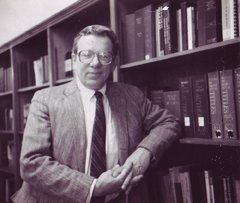
Through my study at Vermont College on sculpting deceased loved ones, I have discovered that there are several ways that I look at a photograph. The first way is just as anyone would, “Nice scene, great memory captured”. The second is much more emotional. I “feel” things from the photographs. In the case of Jeanine, there were some photographs that actually caused me physical pain. The third way is mechanically. In this part of the sculpting I return back to the mechanical ways of comparing, “If his face is so wide, then his shoulders are one and one half the distance of the face, etc.. etc..”
Too Sensitive
This semester for my undergraduate interdisciplinary education at Vermont College, I am studying emotion and touch as it pertains to my sculpture and to myself as a sculptor. In the past I have studied the idea that I might have psychic empathy or there may be something spiritual going on concerning my commissions. I can’t say I really talk to the dead or anything. Though I do say, “Good morning” to each of the commissions in the studio and have been known to chat with them. I can’t say I am talking to the dead though, it is more like I am talking to my clay, and I tend to do this with all commissions, alive or deceased.
It was brought to my attention that
“I develop a relationship with the deceased.”
That seemed strange to me at first. How can one do that? But that is what I do. I look forward to getting to know Dick better, through this commission.
I have always been known as the child who was too sensitive, too emotional. I believe that this is why I can do what I do with sculpting the deceased.
Missing An Important Element, Dick’s Clothes
I miss not having Dick’s clothes. Nancy called and said there are no clothes left, only a pair of pajamas. I could go to the thrift store and buy some old clothes as reference, but I am afraid they will be an emotional hindrance. Let me explain… With each posthumous commission there is a point when the box of personal affects arrives at my door. That is a special time for me. I carve out my space within the day and prepare myself for what emotions will come to me. Sometimes that is not easy, as was the case with Jeanine my first posthumous sculpture that was a death by suicide. That sculpture was filled with emotion, and even after receiving the box of affects I had to travel through some difficult emotions to finally capture Jeanine.
The box of affects and the clothes feeds me somehow. When I have the opportunity of having a box and clothes I also don’t want anyone to touch them or wear them until I have had time alone with them. Then I can turn them over to the model to put on and pose, creating a stand-in for my subject.
I have nothing of Dick Hathaway’s and in many ways I feel empty because of it. The closest I can come to a “personal affects” was the afternoon I spent in Dick’s office. I wish I could have taken some of it home with me. Even when I went through the box of photographs my friend wanted to reach in the box and touch the items. I believe I may have snapped at him.
“Please leave these things to me, let me touch them first.”
I surprised myself at the comment and my forwardness.
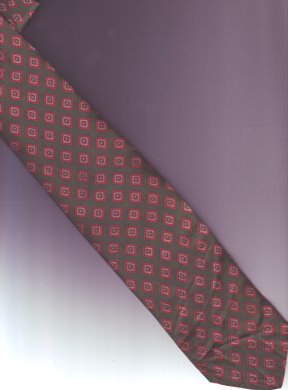
Dick’s tie. I was told he kept this in his office just in case he needed it. I could not take it with me so I scanned it. Just something else that was in the memorial box.